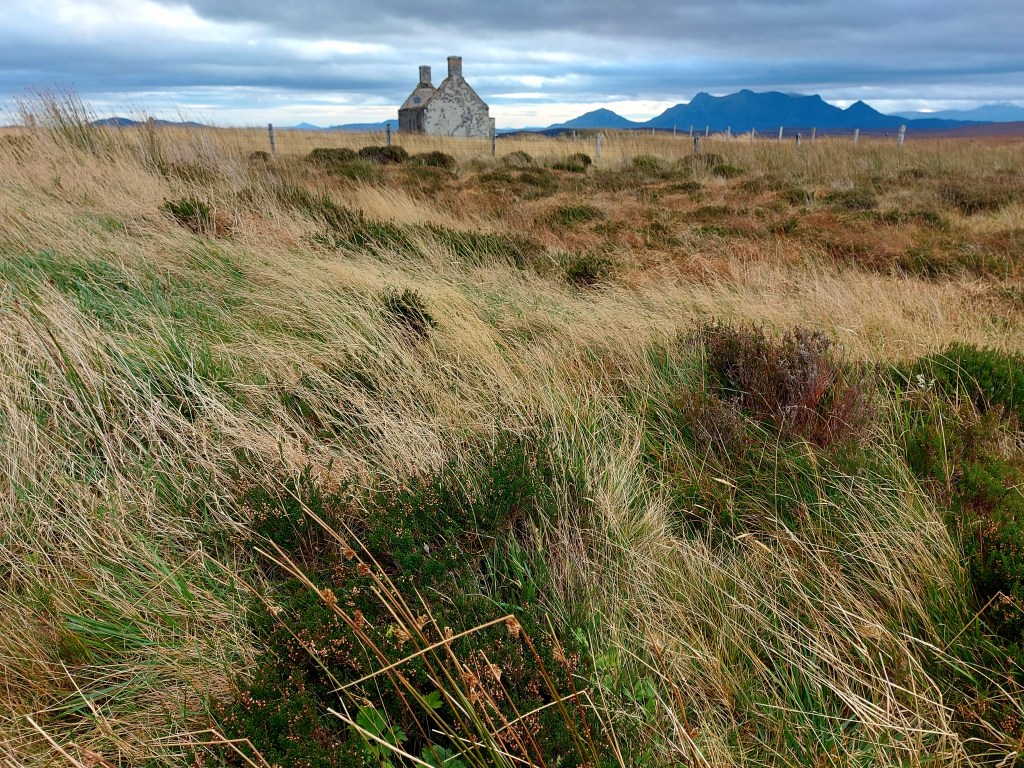


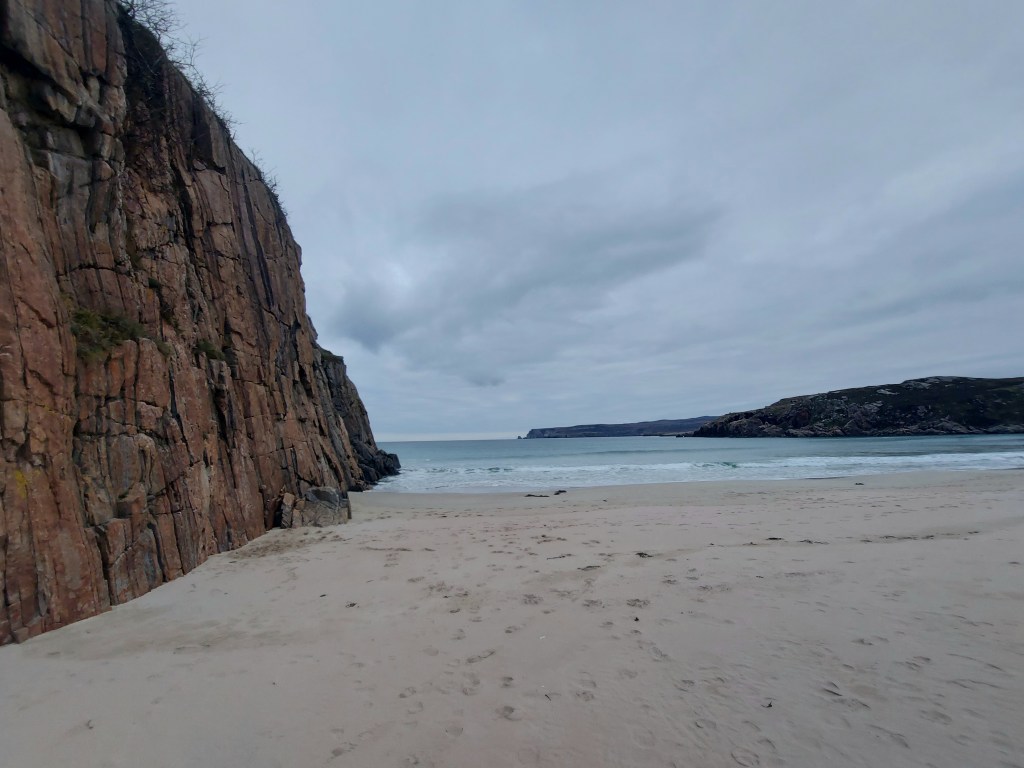



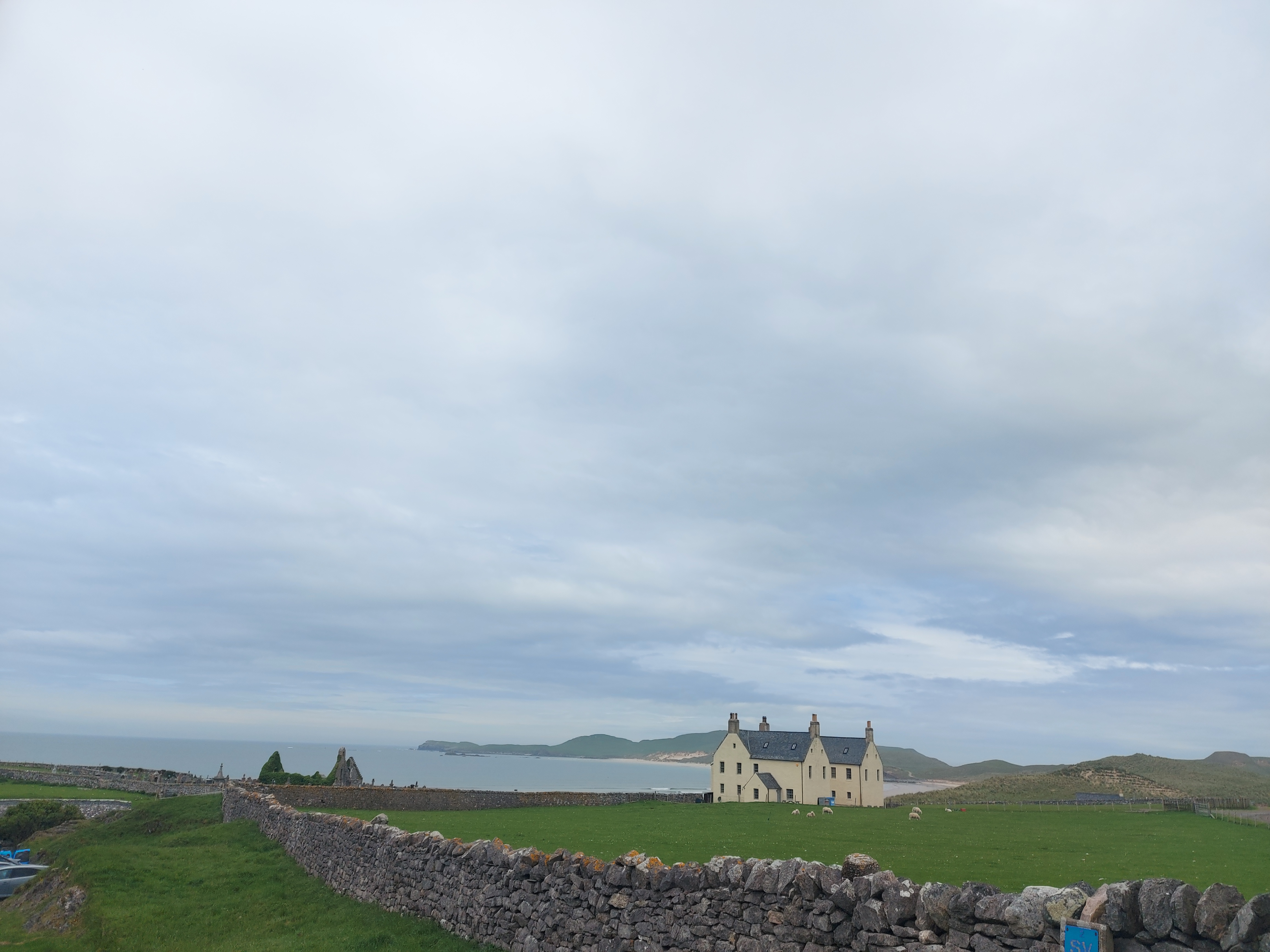
Currently I am working on a long term project about Mackay Country or Dùthaich Mhic Aoidh – a geographical area in the North West of Scotland which had its own distinct dialect of Gaelic. By contrast to Orkney it is a dramatic land of Flow country and mountains, rock, lochs, rivers and sea.
Within sight of Orkney across the Pentland Firth, the shared Norse heritage between Mackay Country and Orkney means there are related place-names such as Durness (Sutherland) and Derness ( the Orkney pronunciation of Deerness).
It is likely that Norse folk would sail south from Orkney to Strathnaver where they kept horses. From there they could continue their journeys overland on horseback. Later Orkneymen may have come to Strathnaver to acquire horses (The Clearance village of Rosal in Strathnaver may be named for ON hross-vollr – ‘horse field’).
On my own journeys south through Mackay Country I stop at brochs and crumbling burial tombs, clearance villages and graveyards that link us to the ancestors. All but a fraction of their stories and songs are unknown to us, but we can still share the mountains with them. In terms of deep geological time we all apprehend them almost simultaneously.
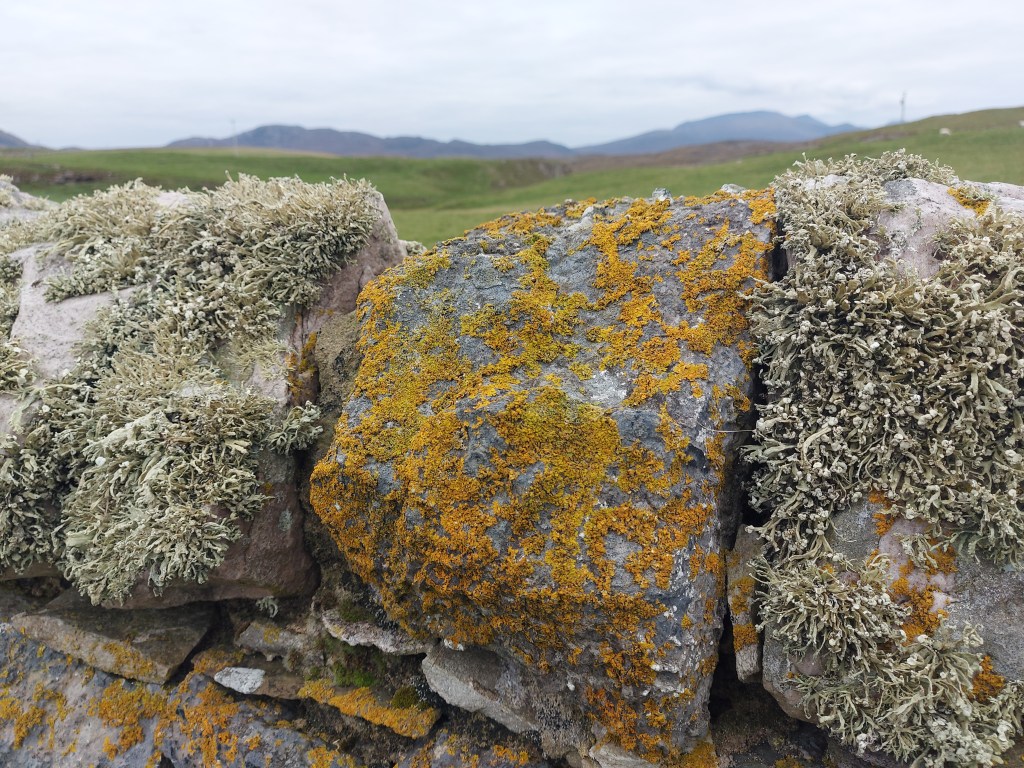
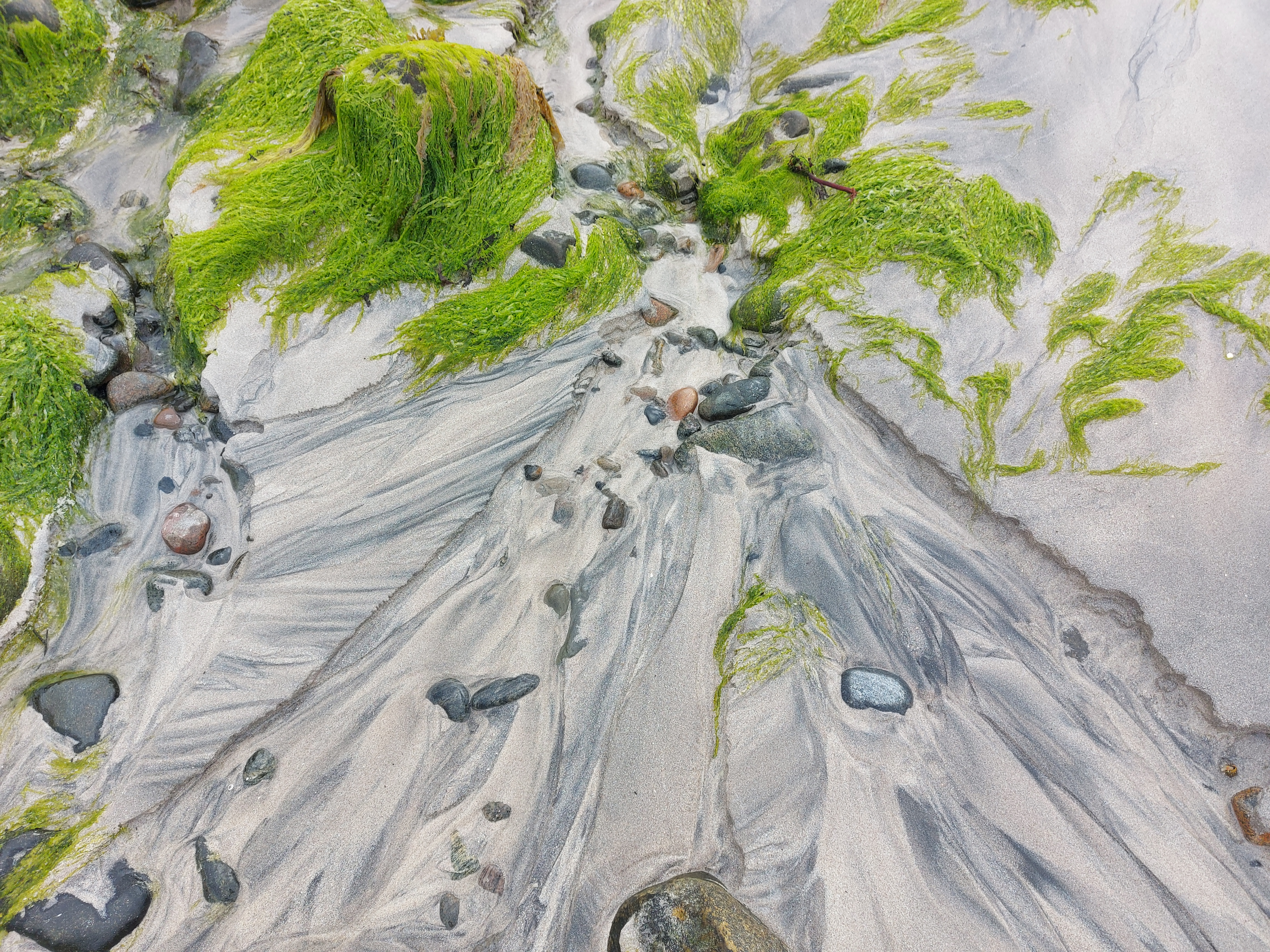
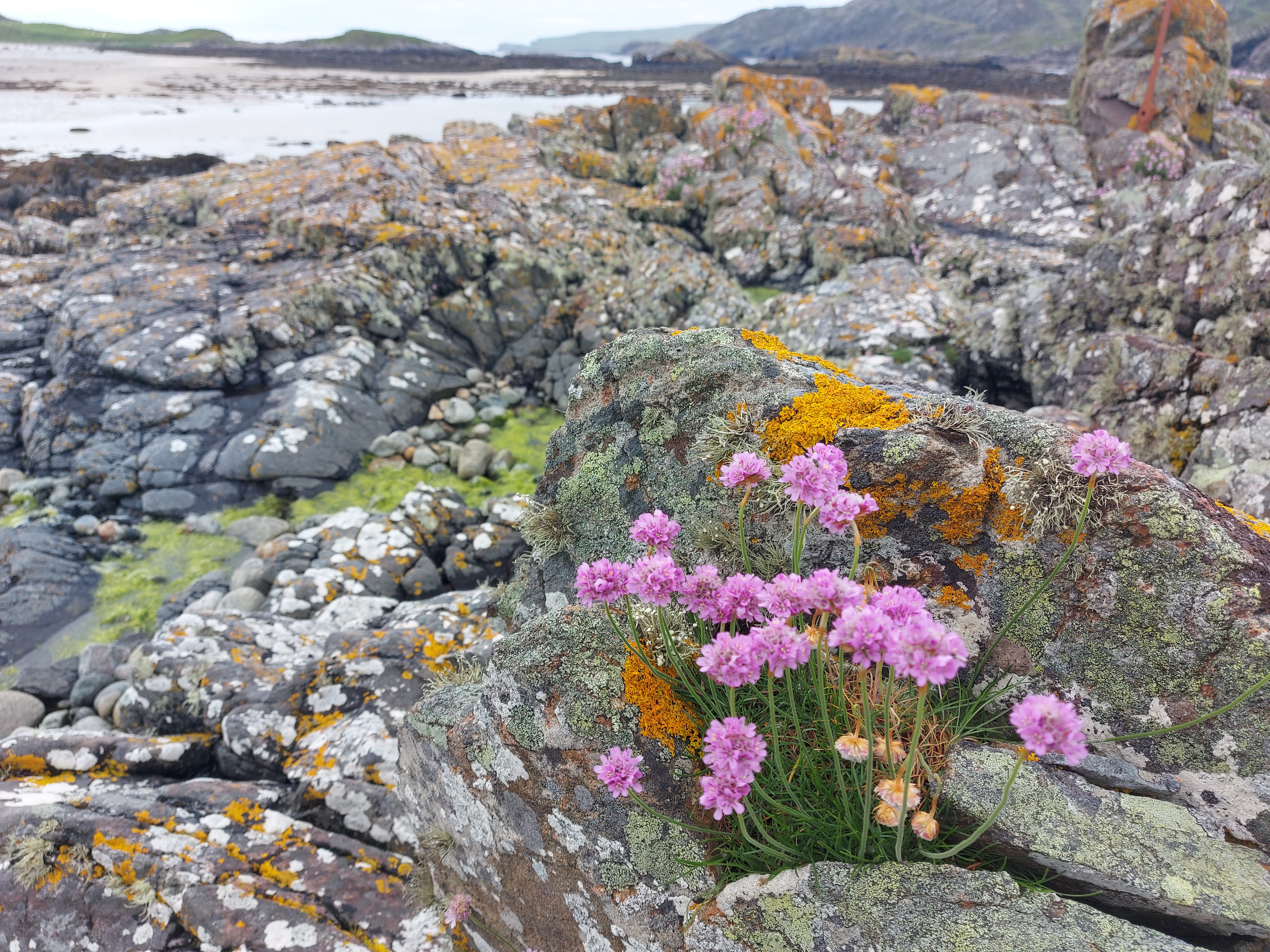
The texture of the mica on the shore; the shape of the erratic boulder balanced on the mountain slope; the pink of the quartzite; the green curl of new bracken; the shade of the hazel trees; dazzling yellow gorse; the sound of water falling; persist and link us. These colours, textures, sounds and sensations are themes within this project.
By using the title ‘Cianalas‘ I mean to acknowledge the Gaelic language my ancestors used and show respect to the present day Gaelic speaking community, and share the sense of ‘belonging/ not belonging’ I recognise when passing the Mackay Country markers.





 Lesley Mackay Art